
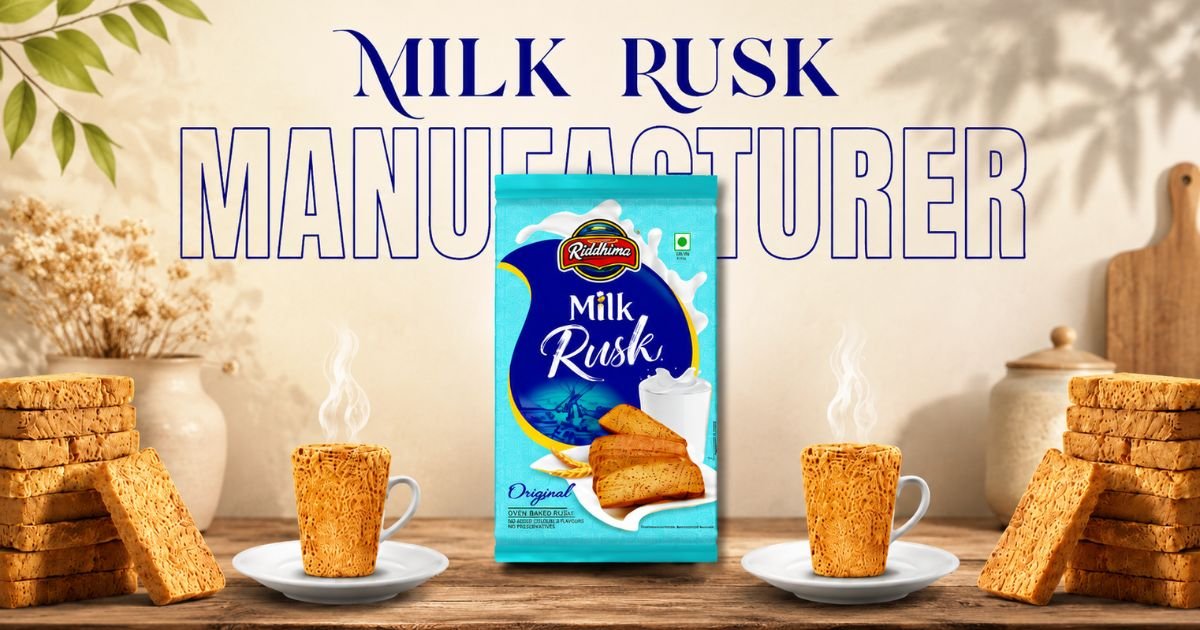
Milk rusk is the snack nobody thinks twice about. Grandparents eat it, toddlers gnaw on it, office workers keep a pack in the drawer. So when someone asks whether it is actually good for you, the honest answer deserves a bit more than yes or no.
Here is a fair look at what milk rusk brings to the table, where it falls short, and how to make it a sensible part of your day.
What milk rusk actually is
Rusk is bread baked twice. Dough is baked into a loaf, sliced, and then slow toasted until almost all the moisture is gone. Milk rusk adds milk or milk solids to the dough, which gives it a softer flavour, a slightly richer smell and a crumb that soaks up tea more gently.
The usual base is wheat flour, often refined, along with sugar, edible fat and yeast. That is the honest starting point. It is a baked grain snack, not a health food, and not junk either.
Where it does well
It is light on the stomach. Because it is dry and toasted, many people find rusk easier to digest than fried snacks like namkeen or samosa. It is often one of the first foods doctors and elders suggest after a stomach upset, alongside khichdi and plain toast.
It is portion friendly. One or two pieces are a clear, countable serving, which makes it easier to stop than with a bowl of chips.
It keeps well. A sealed pack sits in the cupboard for weeks without spoiling, so there is always something simple to offer a guest or eat on a busy morning.
It is easy for older people. Softened in tea or milk, rusk needs very little chewing, which matters for elders with weak teeth.
Where you should be careful
Sugar adds up. Milk rusk is mildly sweet, and if you are also putting two spoons of sugar in your chai, the total climbs fast. People watching blood sugar should count rusk as a carbohydrate serving, not a free snack.
Refined flour is filling for a short while only. A rusk with maida as the main ingredient will not keep you full as long as a meal with protein and fibre. Treat it as a snack, not a breakfast replacement.
Portions creep. Two rusks become four when you are reading the newspaper. Put a fixed number on a plate rather than eating from the pack.
Making it a smarter snack
Pair it with something that has protein. A glass of milk, a bowl of curd or a handful of roasted chana turns a quick rusk into a more balanced mini meal.
Cut the sugar in your tea if you are having rusk with it. The rusk already brings sweetness.
Read the label. Some rusks use wheat flour or semolina as well, and those tend to be more filling. The ingredient list is ordered by weight, so whatever comes first is the main ingredient.
And if you have diabetes, a heart condition or a child with specific dietary needs, ask your doctor or a dietitian how rusk fits your plan. General advice like this cannot replace that.

Milk rusk for children and elders
For toddlers, rusk is often one of the first finger foods, but it should always be given under supervision, softened if needed, and never as a replacement for proper meals. Hard pieces can be a choking risk for very young children.
For elders, rusk softened in warm milk is an easy, comforting snack between meals. Pair it with a few soaked almonds or a small bowl of dalia later in the day so the diet does not lean only on refined flour.
Suji or milk, which to pick
Milk rusk is gentler in taste and texture. Suji rusk, made with semolina, gives a coarser crunch and many people find it more satisfying with strong tea. Neither is a health miracle. Pick the one your family actually enjoys and keep portions sensible.
So, is it good for health?
In sensible amounts, as part of an otherwise balanced diet, milk rusk is a perfectly reasonable everyday snack. It is not a superfood and it does not need to be. It is a comforting, simple bite with chai, and that is a perfectly good reason to enjoy it.
Also read
Order from Riddhima Foods
Enjoy your morning chai with Riddhima Foods milk rusk and suji elaichi rusk, baked in Aligarh. Order at riddhimafoods.com, call +91 95203 95033, or email care@riddhimafoods.com for product questions.

 LICENSE NUMBER: 12721056000150