
In half the homes in North India the morning plate has a slice of bread. In the other half, it has two pieces of rusk. Families rarely switch, and both sides are sure they have chosen right.
So which is actually better? The fair answer is that they suit different mornings. Here is how they compare, point by point.
They begin as almost the same thing
Rusk is bread that has been baked a second time. Dough is shaped, proofed and baked into a loaf, just like bread. Then, instead of being packed soft, the loaf is sliced and slowly toasted again until nearly all the moisture leaves it.
That is also why people ask whether rusk and toast are the same. They are close cousins. Toast is bread crisped for a few minutes just before eating, so it stays soft inside. Rusk is dried right through at the bakery, so it is crisp all the way and stays that way for weeks.
Shelf life, a clear win for rusk
Fresh bread lasts a few days at room temperature, less in the humid months, before mould or staleness sets in. Rusk, with very little moisture left, keeps for weeks in a sealed pack and a good while longer in an airtight dabba.
If you shop once a week, or you live alone and cannot finish a loaf in time, rusk wastes far less food.
Texture and how you eat it
Bread is soft and makes a base. You can butter it, make a sandwich, roll it into a quick bread pakora, or toast it with a little ghee. It is a component of a meal.
Rusk is a finished snack. It is made to be dunked in chai or milk, and it holds that crunch for a second or two before it softens. Nobody makes a sandwich out of rusk.
So the real question is what you want from your morning. A quick bite with tea, or something to build a breakfast around.
Nutrition is closer than people think
Since both start from similar dough, the basic nutrition is not wildly different. Weight for weight, rusk is more concentrated because the water has been baked out, so a few pieces of rusk can carry as many calories as a couple of bread slices. Many rusks also carry a little more sugar than plain bread.
Bread, on the other hand, gets eaten with toppings like butter, jam or cheese that add up quickly. Whole wheat bread and rusks that include atta or suji are generally the more filling options in each group.
If you are tracking calories or blood sugar, count servings honestly for both, and talk to your doctor about what fits your diet.
Convenience on a busy morning
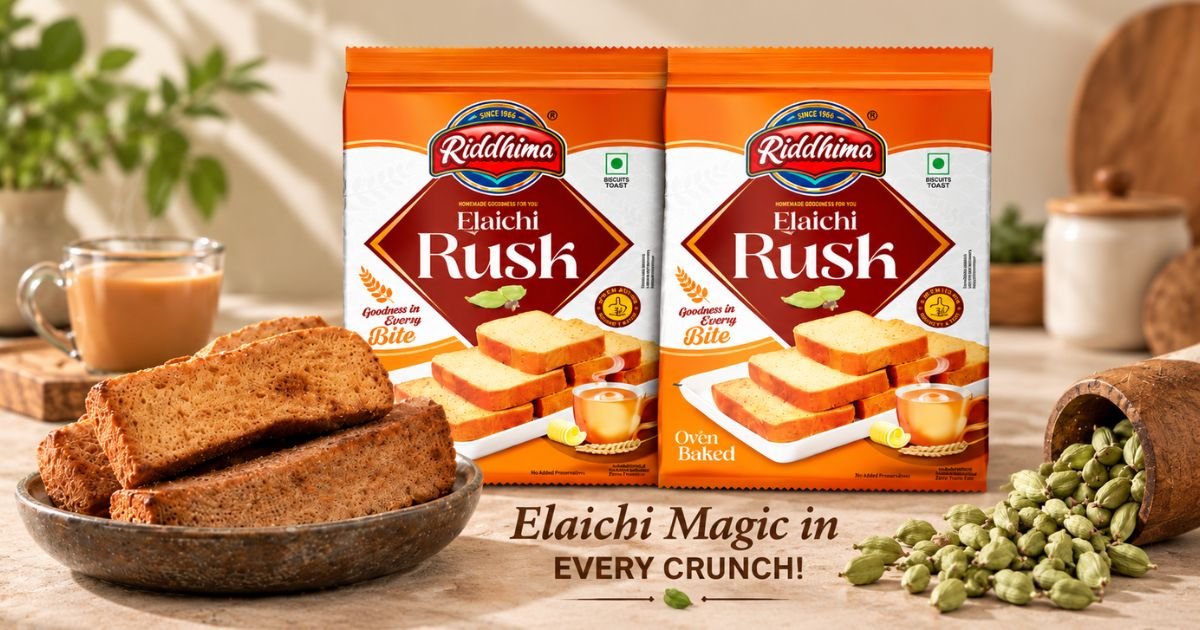
Rusk needs no toaster, no butter and no plate. Open the dabba, pour the chai, done. That is why it is the travel snack, the office drawer snack and the snack for elderly parents living on their own.
Bread wins when you have ten spare minutes and want a proper breakfast with an egg, paneer bhurji or vegetables.
What about children and older family members
For children, bread with a filling like paneer, peanut butter or a vegetable spread is often the more complete breakfast, while rusk works better as an after-school snack with milk. For elderly parents, rusk softened in tea is easy to eat and easy to keep at hand, though it helps to pair it with fruit or a glass of milk for a little more nutrition.
A note on freshness
Bread is at its best on the day it is baked. Rusk is at its best close to its manufacturing date too, even though it lasts much longer. Whichever you choose, buy from a source that moves stock quickly, and store rusk in an airtight dabba once opened so it keeps its crunch.
The verdict
Rusk is better when you want convenience, long shelf life and a quick bite with tea. Bread is better when you want a fuller breakfast with toppings and fillings. Many households end up keeping both, bread for weekend breakfasts and rusk for the everyday chai moment.
Also read
Order from Riddhima Foods
Keep your everyday chai sorted with Riddhima Foods suji elaichi rusk and milk rusk, baked in Aligarh. Order at riddhimafoods.com or call +91 95203 95033. For bulk orders, email sales@riddhimafoods.com.




 LICENSE NUMBER: 12721056000150